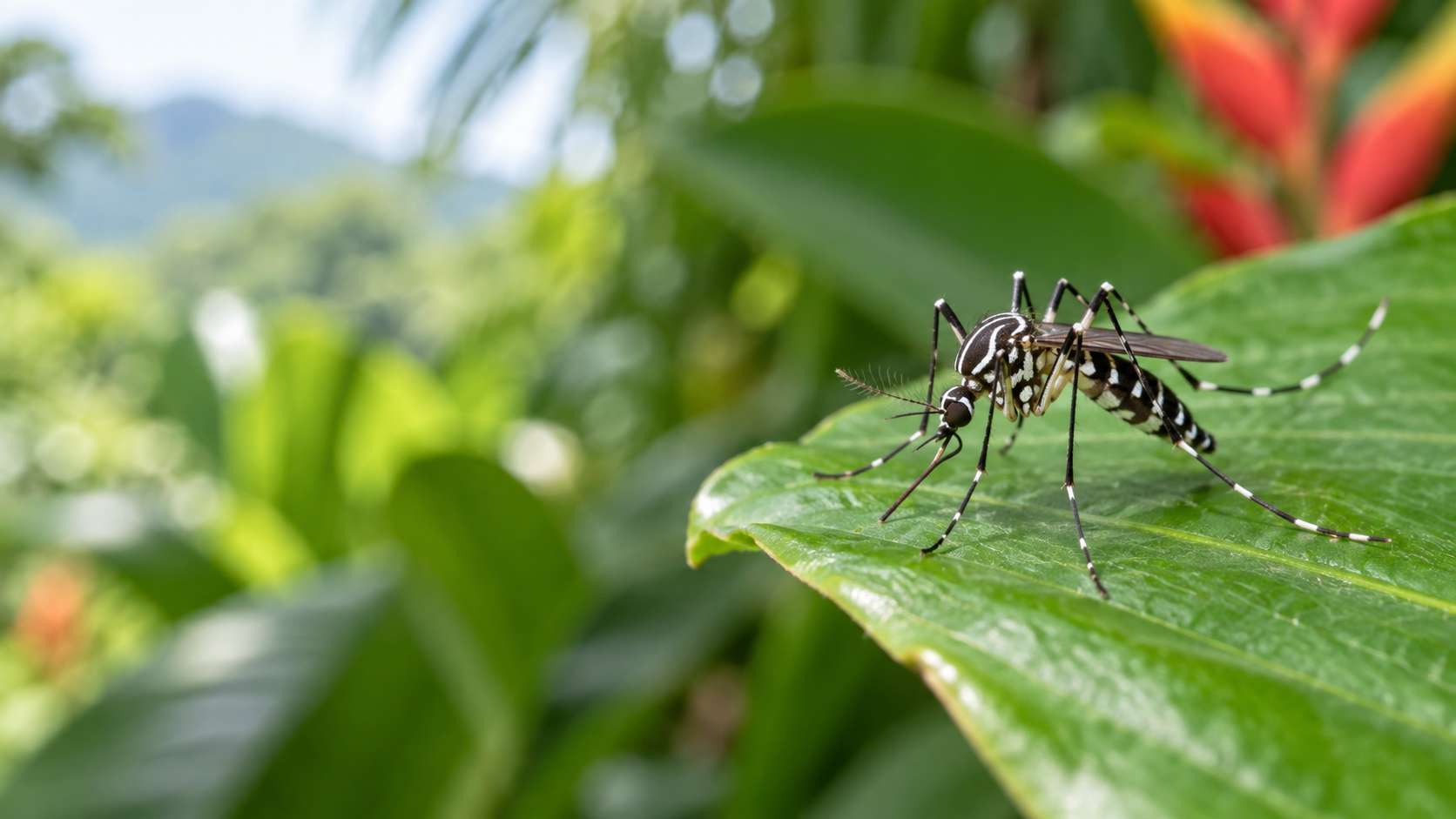
Aedes aegypti mosquito with white-striped legs resting on a tropical leaf

Dengue vaccines, clearly explained

Vaccine for Dengue

Two vaccines. Four virus types. One decision that depends on where you live, where you are going, your age and whether you have had dengue before.

14.6 milliondengue cases reported globally in 2024
Important

Vaccination is not automatic for every traveller. Qdenga is the newer option and has broader eligibility in many countries. The older Dengvaxia should only be used after confirmed previous dengue infection. Country recommendations differ.

Check who may benefit

The two-vaccine picture

Same target. Different rules.

Both are live, weakened, four-serotype vaccines. Their schedules, evidence and safe-use criteria are not interchangeable.

Older optionCYD-TDV

Dengvaxia®

Sanofi Pasteur tetravalent dengue vaccine

3doses
0, 6 and 12 months
Prior dengue?
Yes, confirmed. In people never infected before, vaccination can raise the later risk of severe dengue and hospitalisation.
Age
Eligibility is narrow and country-specific. In the US: ages 9–16, living in an endemic area, with laboratory-confirmed previous infection.
Evidence
Effective in appropriately selected people who have already had dengue; CDC describes roughly 80% protection against illness in eligible children.
Availability
Limited and declining. The manufacturer has announced production discontinuation because of low demand.

Never use Dengvaxia on the basis of a vague recollection of fever. Eligibility needs reliable evidence of prior dengue and local clinical guidance.

Bottom line: Qdenga is generally the more practical vaccine where approved, but “newer” does not mean everyone needs it. Dengvaxia’s prior-infection restriction applies to Dengvaxia, not Qdenga; local recommendations for Qdenga may still favour people with previous dengue or substantial ongoing exposure.

Travel vaccine decision helper

Is dengue vaccination worth discussing?

Answer a few questions for a tailored conversation guide. This does not diagnose dengue, establish vaccine eligibility or replace a travel-health consultation.

Your trip
Exposure and health

Dengue in 90 seconds

Often mild. Sometimes suddenly serious.

Dengue is caused by four related viruses, DENV-1 to DENV-4, carried mainly by infected female Aedes aegypti mosquitoes.

01

Exposure

After a bite, symptoms usually begin in 4–10 days. Many infections cause no symptoms at all.

02

Febrile phase

High fever, severe headache, pain behind the eyes, intense muscle and joint pain, nausea, vomiting and rash can last 2–7 days.

03

Warning phase

Severe dengue often declares itself as the fever settles: abdominal pain, persistent vomiting, bleeding, rapid breathing, marked weakness, restlessness or cold, pale skin need urgent care.

04

Recovery

Most people recover in 1–2 weeks, although fatigue may persist. Early recognition and careful fluid management make severe disease far more survivable.

Why a second infection can be worse

Infection with one serotype usually gives lifelong protection only against that serotype. A later infection with a different serotype carries a higher risk of severe dengue through antibody-dependent enhancement. It is not true that every repeat episode is inevitably worse, and a first infection can also be severe.

Know the vector

The striped city mosquito

Aedes aegypti is dark-bodied with conspicuous white-banded legs and pale, lyre-shaped markings on its thorax. Those smart stripes are a useful clue, but identification is best left to experts.

Day biterMost active after sunrise and before sunset, though it can bite throughout the day.
HomebodyLives close to people, often indoors or around shaded homes, and prefers human blood.
Container breederLays eggs in small collections of water: buckets, pot saucers, gutters, tyres and tanks.
Persistent eggsEggs can survive drying for months and hatch when containers refill.
Same journey, different mosquitoes.

Anopheles mosquitoes that transmit malaria may occur in the same regions as dengue-carrying Aedes. A person can be bitten by both and, rarely, have dengue and malaria together. Do not use the bite, mosquito appearance, or even one positive result to self-diagnose: tell the clinician exactly where and when you travelled so they can choose and repeat the right tests.

Prevention that works

Vaccination is one layer.

No dengue vaccine prevents every infection. Pair vaccination decisions with bite avoidance and fewer breeding sites.

01

Repel

Use an effective repellent such as DEET, picaridin or oil of lemon eucalyptus/PMD as directed.

02

Cover

Wear loose, long clothing. Treat clothing and gear with permethrin where appropriate; do not put permethrin directly on skin.

03

Screen

Choose air-conditioned or well-screened rooms. Use bed nets where rooms are exposed, including for daytime rest.

04

Tip out

Empty, scrub, cover or discard water-holding containers every week. Even a bottle cap can become a nursery.

Mosquito control, re-engineered

Release mosquitoes to stop mosquitoes?

Targeted releases can make local Aedes aegypti poor at transmitting dengue or suppress their numbers. These methods complement container removal, surveillance and outbreak response.

Population replacement

Wolbachia in Cairns

Male and female mosquitoes carrying Wolbachia are released. The bacterium interferes with dengue replication and is inherited, so it can become established in the wild population.

96% lower dengue incidenceEstimated intervention effect in treated Cairns-area populations; 95% CI 84–99%. Published monitoring found stable establishment for up to eight years.
Population suppression

Sterile or incompatible males

Released males may be irradiated, genetically self-limiting, or carry an incompatible Wolbachia strain. Males do not bite; matings with wild females produce eggs that fail to develop.

>80% fewer mosquitoesInitial result from CSIRO’s Debug Innisfail trial after just over three months. Suppression generally requires repeated releases.
Real-world confirmation

Beyond Australia

A cluster-randomized trial in Yogyakarta, Indonesia, compared areas with established Wolbachia mosquitoes with untreated areas across all four dengue serotypes.

77% fewer symptomatic casesDengue hospitalisations fell by 86%. Local ecology, coverage, community participation and monitoring still matter.

Why “male or female” matters: self-sustaining replacement programs release both sexes so Wolbachia spreads. Suppression programs aim for male-only releases because males cannot bite; low-dose irradiation may sterilize any accidentally included females.

Who should discuss vaccination?

Think exposure, not just destination.

A short city visit in a low-transmission season is not the same as living for years in an outbreak-prone area.

Ticking boxes is a conversation starter, not a medical eligibility test.

Price reality

Ask what the quote includes.

Medicine, prescription, clinical assessment and administration may be separate. Two doses can also mean two appointment fees.

CountryIndicative vaccine priceWhat to check
AustraliaNewly approvedNo dependable retail benchmark yetQdenga is a prescription medicine. Ask for the dose price, consultation, dispensing and injection fees separately. No confirmed routine PBS/NIP subsidy found.
United KingdomPrivate travel clinicsAbout £90–£130 per doseOften clinic-supplied; consultation or administration may be extra. Usually self-funded for travel.
GermanyPublished university clinic priceAbout €113 per dosePrescription and administration arrangements vary; some insurers reimburse when travel vaccines are covered.
ThailandHospital offersAbout ฿2,500–฿2,800 per dosePackages may exclude doctor and hospital service fees; two-dose promotions may be cheaper.
BrazilRetail pharmacy listingsAbout R$346–R$421 per dosePrescription required for retail purchase. Eligible children in priority areas may receive public-program vaccination.

Indicative public prices checked September 2026; not quotes. Currency conversion, stock and eligibility can change. Dengvaxia pricing is not compared because availability is now limited and its eligibility is narrow.

Ask the clinic:Is that per dose or the full course?Is the vaccine itself included?Are consultation and injection fees included?Is a prescription needed first?Can my insurer reimburse any part?

Clinic finder

Find dengue vaccination near you

Search travel-medicine clinics and pharmacies, then call before attending. Qdenga stock and eligibility screening vary.

Diagnosis and care

If you think it is dengue

Tell the clinician where and when you travelled. PCR or NS1 antigen tests are useful early; antibody tests become more useful later and can be complicated by related viruses.

It may not be dengue

Early symptoms overlap with many infections. Geography, incubation time, exposures, rash, joint pattern and laboratory testing help separate them.

MalariaCOVID-19InfluenzaChikungunyaZikaRoss River virusJapanese encephalitisYellow feverMeaslesTyphoidLeptospirosisOther arboviruses

Fever after travel in a malaria area is urgent. Dengue and malaria often circulate in the same countries and even the same communities. Malaria can deteriorate quickly and needs prompt blood testing even if dengue, flu or COVID seems more likely. Co-infection is possible, so one positive test does not always end the investigation; one negative malaria test may also need repeating if suspicion remains.

Choose the test by day of illness

Days 0–7RT-PCR/NAAT detects viral RNA and can identify the serotype. NS1 antigen detects a dengue protein. A positive result confirms acute infection; a negative result does not completely exclude it.
After day 3IgM antibodies begin to appear. A single positive is usually presumptive because antibodies can cross-react with Zika, Japanese encephalitis, West Nile or yellow fever infection/vaccination.
After day 7IgM becomes the main test when early PCR/NS1 was missed or negative. Paired blood samples can clarify a changing antibody response.
Past infectionA single IgG test cannot reliably date an acute illness and may reflect old dengue or another flavivirus. Vaccine eligibility testing needs validated methods and clinical interpretation.
80–100%Reported Australian PCR sensitivity during the acute phase, with specimen timing and handling affecting results.
91% / 96%WHO review’s pooled sensitivity / specificity for combined NS1 + IgM ± IgG rapid tests against reference standards. Individual brands vary.
Home test?Rapid kits are sold online in some countries, but regulatory status and quality vary. In Australia, use clinician-ordered laboratory or approved point-of-care testing; do not rely on an imported retail kit to rule dengue in or out.
Rapid test positive

Talk to a doctor and confirm it

A positive NS1 result strongly supports current infection; an antibody-only result may need clarification. A clinician may order PCR/NS1 or serology plus a full blood count with platelets and haematocrit, and check liver, kidney and electrolyte results according to severity. Platelets often fall, but the trend and the whole clinical picture matter more than one number.

Rapid test negative

Do not ignore worsening illness

Testing too early or too late, low virus levels, secondary infection, poor sampling or test quality can produce a false negative. Seek medical review if fever persists, you feel worse, or exposure risk is meaningful. A clinician may repeat testing later or use a different method; urgent warning signs should never wait for another home test.

Just bitten?

A dengue vaccine is not an emergency after-bite treatment

It cannot stop an infection from a bite that has already happened, and protection is not immediate. Qdenga is a planned two-dose course three months apart. If you develop fever or feel unwell, seek assessment and testing rather than rushing to vaccinate; vaccination is generally postponed during moderate or severe acute illness. Once recovered, discuss vaccination for future exposure with a qualified clinician.
Do

  • Rest and take frequent fluids or oral rehydration solution
  • Use paracetamol/acetaminophen only as directed for fever and pain
  • Seek medical advice if symptoms persist or worsen, or fluids will not stay down
  • Avoid mosquito bites while ill so mosquitoes cannot pass the virus onward

Do not

  • Take aspirin, ibuprofen, naproxen or other NSAIDs because they can increase bleeding risk
  • Ignore deterioration when the fever falls
  • Assume vaccination rules out dengue
  • Wait at home with bleeding, persistent vomiting, severe abdominal pain or breathing difficulty
Urgent: Severe abdominal pain, repeated vomiting, bleeding, drowsiness or restlessness, difficulty breathing, faintness, cold clammy skin or blood in vomit/stool require immediate medical care.

Evidence desk

Sources and limits

This independent guide is educational and does not replace personal medical advice. Vaccine approvals, recommendations, supply and funding change. Check the current product information and a qualified travel-health clinician.

Reviewed 18 September 2026